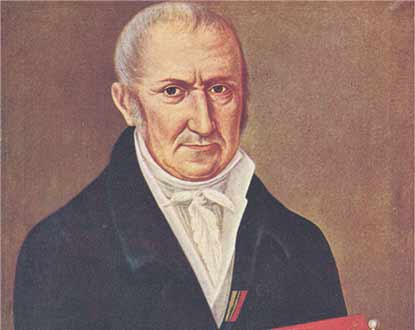
French Scientist
1775-1836
He developed the theory of electromagnetism, conceived the galvanometer, invented the first electric telegraph, and, with Arago, the electromagnet. He also significantly contributed to the development of mathematics, chemistry, and philosophy.
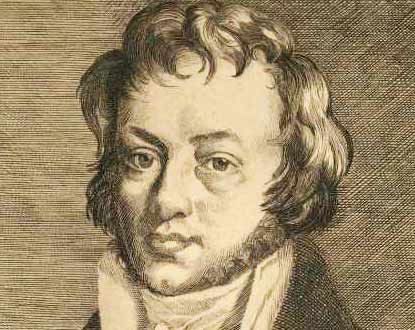
He discovered that the direction in which a compass needle moves depends on the direction of the electric current flowing nearby and deduced the so-called "Ampère's right-hand rule": Ampère's man lies on the conductor; the current, which conventionally goes from positive to negative, flows from his feet to his head; his eyes are directed towards the magnetized needle. The north pole of this needle then moves to his left. This rule is also represented by the right-hand rule: if the first three fingers of the right hand are spread so that the middle finger indicates the direction of the magnetic field and the thumb indicates the direction of motion, the current flows in the direction indicated by the index finger.
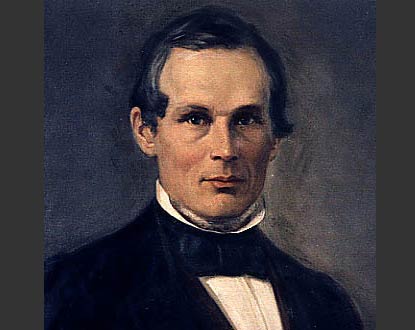
Swedish Scientist
1814-1874
In his honor, the angstrom (Å) is a unit of length equal to 10-10 meters, used to measure distances at the atomic and molecular scale.
Greek Scientist
287 - 212 BC
He found the formulas for the surface area and volume of the cylinder and the sphere, provided a range for π, invented various mechanical devices: lever, pulley, endless screw, gear, founded hydrostatics, and formulated the principle of hydrostatics.
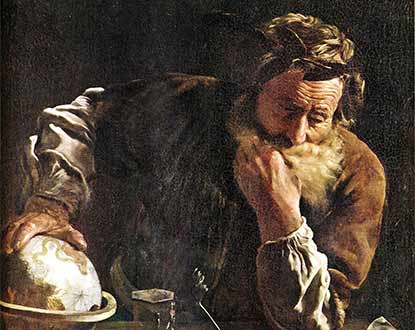
A circumstance in Archimedes' life relates to the discovery of a fundamental principle of hydrostatics. King Hiero of Syracuse suspected a goldsmith who had made him a gold crown of having mixed silver into it. He consulted Archimedes on how to discover this fraud while keeping the crown intact. The illustrious scientist pondered this for a long time until one day, while in his bath, he noticed that his limbs, submerged in water, lost some of their weight. Thus, Archimedes' principle was found: Any body immersed in a fluid experiences a vertical buoyant force equal to the weight of the displaced fluid. In the enthusiasm of this discovery, he got out of the bath and ran naked into the street shouting: "Eureka! Eureka! I have found it, I have found it." He only needed to measure the volume of the crown by immersing it in water and then weigh it to compare its density to that of solid gold. He held off the Romans who were besieging Syracuse for three years. It is claimed that he found a way to set fire to enemy ships at a distance using mirrors reflecting and concentrating solar light. In 212 BC, after several years of siege, Syracuse fell into Roman hands. General Marcus Claudius Marcellus, however, wanted to spare the scientist. Unfortunately, a Roman soldier encountered Archimedes as he was drawing geometric figures on the ground, unaware that the city had been taken by the enemy. Disturbed in his concentration by the soldier, Archimedes is said to have exclaimed, "Do not disturb my circles!" The soldier, offended by the old man's refusal to obey, then killed him with a sword. In homage to his genius, Marcellus gave him a grand funeral and erected a tomb adorned with sculptures representing the works of the deceased.
Another famous phrase by Archimedes is the well-known "Give me a place to stand, and I will move the Earth." It illustrates the principle of the lever and his work on the moments of force.
Danish Astronomer
1546-1601
He is credited with the remarkable improvement of astronomical instruments. From his work De nova stella anni 1572 and collections of observations, his student Kepler derived the laws that bear his name.
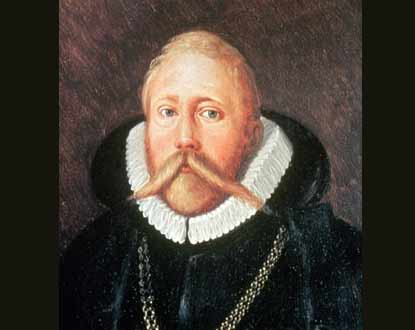
Italian Chemist
1826-1910
He formulated the law according to which atoms always intervene in compounds as multiples of the same quantity.
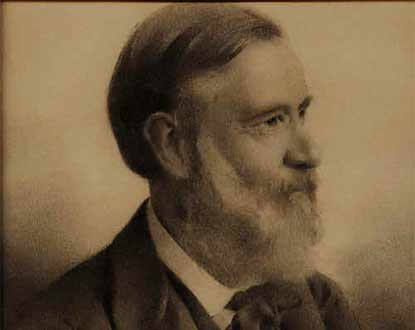
French Astronomer
1625-1712
Director of the Paris Observatory in 1672, he is the author of numerous memoirs on Venus, Mars, and Jupiter. He discovered two satellites of Saturn.
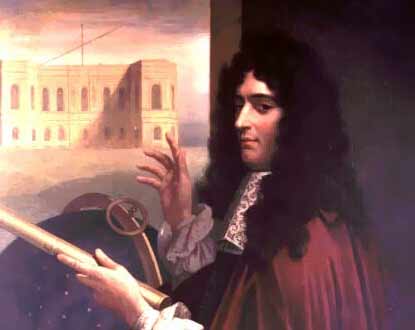
English Physicist and Chemist
1731-1810
He identified hydrogen and conducted the first precise analysis of air. He was the first to show, by combining oxygen and hydrogen under the action of an electric spark, that these two gases unite in determined proportions to form water.
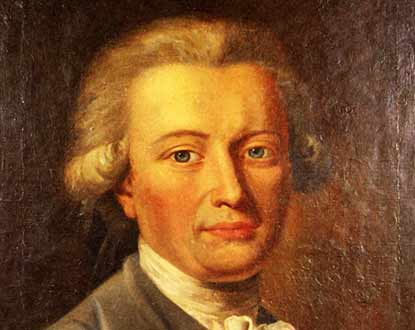
Swedish Physicist
1701-1744
He was a professor of astronomy at the University of Uppsala (founded in 1477). He is best known to the general public for originating a relative temperature scale whose unit, the degree Celsius (°C), bears his name.
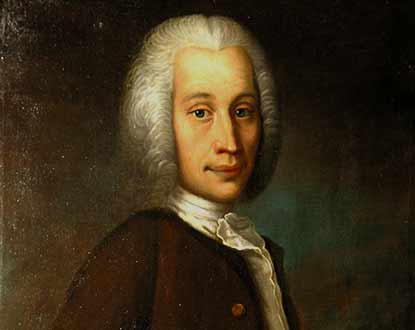
French Physicist
1924-2010
A researcher at CERN, he designed several particle detectors. His devices are used in biology and medicine. He received the Nobel Prize in 1992.
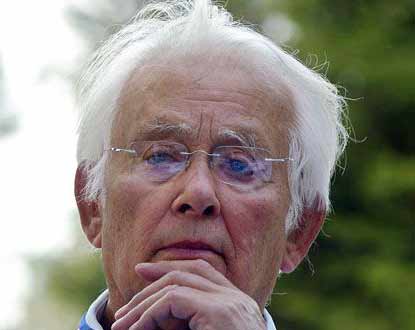
Polish Astronomer
1473-1543
In his treatise De revolutionibus orbium coelestium libri IV (published in 1543), he demonstrated, contrary to the ideas of the time, that the Earth is not immobile at the center of the Universe, but that it rotates on itself and around the Sun.
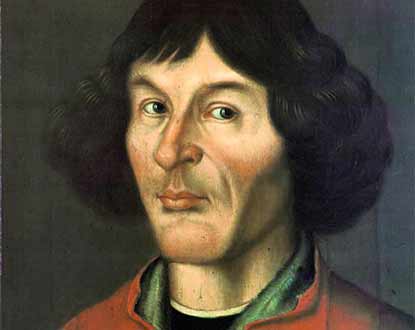
English Physicist and Chemist
1766-1844
Around 1794, he published a first work on abnormal color vision (daltonism). Around 1804, he developed the modern atomic theory and expanded it in his work New System of Chemical Philosophy (1808-1827). He expressed the discontinuity of matter.
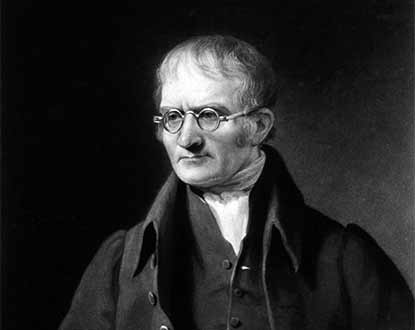
Greek Philosopher
460 - 370 BC
He developed a theory according to which sensible qualities (color, odor, etc.) are purely subjective and that the true principles of things are void and atoms, indivisible particles.
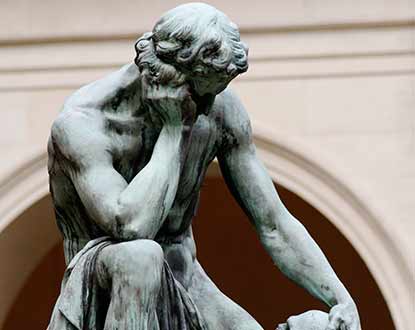
American Inventor
1847-1931
Very young in 1864, he invented a duplex telegraph allowing two dispatches to be sent simultaneously in opposite directions on the same wire. Having become rich and famous, he founded a factory in 1876, where he made numerous inventions including the phonograph (1877), the incandescent electric lamp (1878). With the kinetoscope, he was a precursor of the cinematograph.
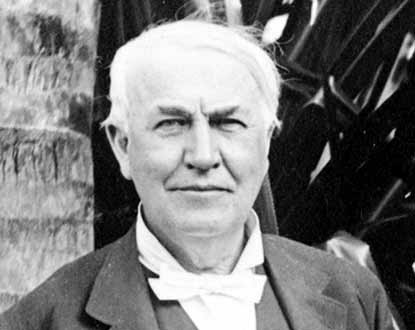
German Physicist
1686-1736
Inventor of an aerometer and a thermometer scale, which have retained his name.
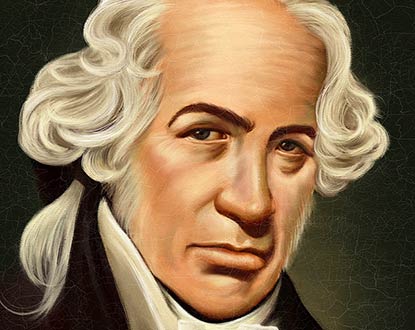
English Physicist and Chemist
1791-1867
In 1821, he observed the action exerted by a magnet on an electric current, complementing the theories developed by Ampère. In 1831, he made his most important discovery, which allows the transformation of mechanical work into electrical energy and led to the construction of dynamos.
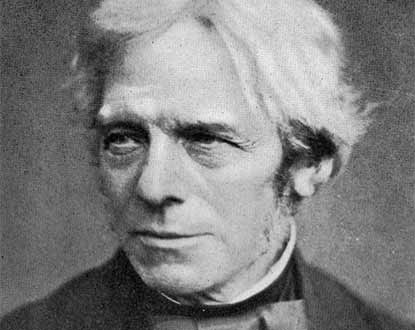
French Physicist
1819-1896
In 1849, he developed the first physical method to measure the speed of light and extended to optics the effect discovered by Doppler in the case of sound waves. It became possible to measure the speeds of stars and discover binary stars.
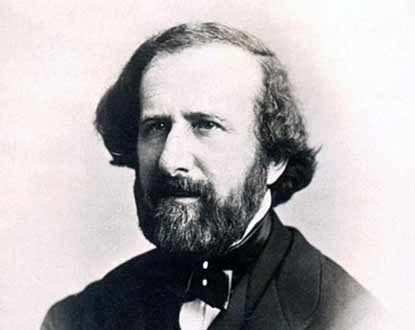
French Physicist
1819-1868
He developed a method for measuring the speed of light, applicable both in air and water, with different results obtained in the two media. In 1851, he conducted a famous experiment at the Panthéon intended to demonstrate the rotation of the Earth, using a 28 kg pendulum suspended from a 67 m steel wire.
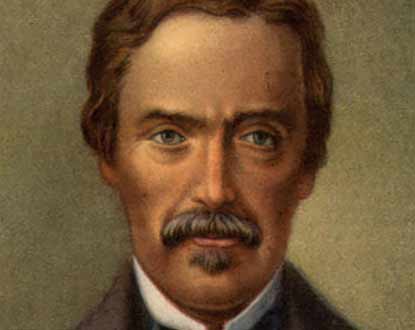
Italian Scientist
1564-1642
A professor of science at the University of Padua from 1592, Galileo embodies, like Leonardo da Vinci, the versatile scholar of the Renaissance. He is the author of numerous experiments, notably concerning the fall of bodies in a vacuum or the oscillation of pendulums (Dialogue Concerning the Two Chief World Systems, 1632). His work in astronomy, carried out on behalf of the Grand Duke of Tuscany, Cosimo II, led him to side with Copernicus on the question of the rotation of the Earth and the fact that it is not the center of the Universe. This theory being considered heretical by the Church, Galileo was placed on the Index by the Inquisition in 1633 and ended his life under house arrest.
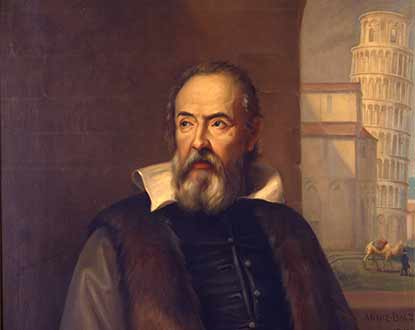
Italian Physician and Physicist
1737-1798
Galvani demonstrated an electricity specific to animals, which was called galvanic current. His theory led Volta to the discovery of the electric battery.
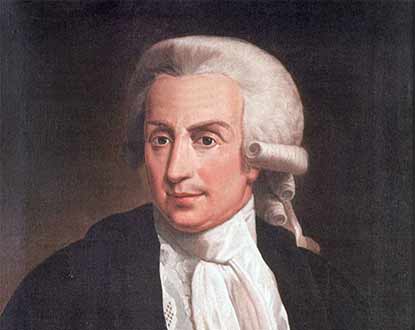
German Scientist
1777-1855
Author of works on celestial mechanics, error theory, magnetism, electromagnetism, and optics. Nicknamed the "Prince of Mathematicians," he is considered one of the greatest mathematicians of all time.
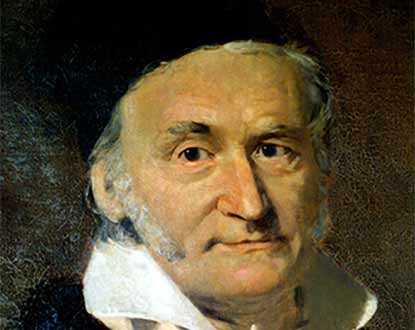
English Physician and Physicist
1554-1603
He established a comprehensive theory of terrestrial magnetism in his first treatise on magnetism, De Magnete, in 1600. Based on experiments, he likened the Earth to a magnet, noted the rules of repulsion and attraction of magnets by their poles, and also provided the first notions of electricity, including a list of bodies that can be electrified by friction.
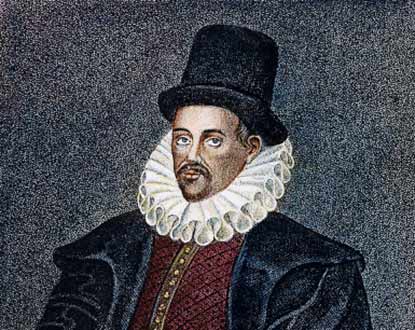
Belgian Electrical Engineer and Inventor
1826-1901
He improved alternating current machines in 1867. In 1869, he designed the commutator, which made it possible to obtain direct current devices. In 1871, he presented the first dynamo to the Academy of Sciences: the Gramme machine.
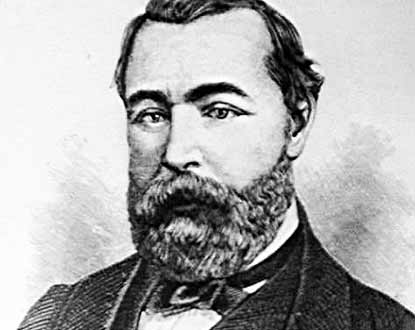
English Astronomer
1738-1822
He built his own telescopes with which he undertook the systematic observation of double stars. In 1781, he discovered the planet Uranus. In 1783, he demonstrated the movement of the solar system towards the apex, whose coordinates he provided. In 1787, he discovered two satellites of Uranus, Titania and Oberon, and in 1789, two satellites of Saturn, Enceladus and Mimas.
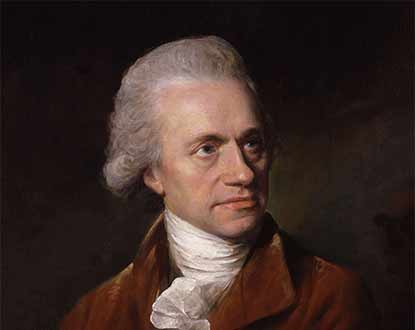
English Physicist
1818-1889
He studied the heat generated by electric currents in conductors and determined the mechanical equivalent of the calorie.
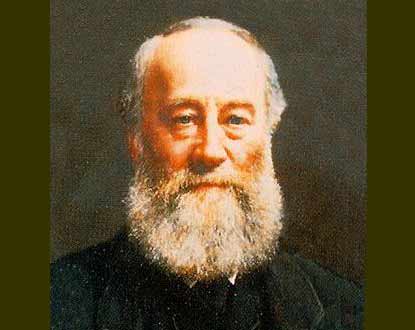
German Astronomer
1571-1630
He refined the representation of the solar system given by Copernicus and formulated three laws relating to the movement of planets, the first two following a study of the positions of the planet Mars recorded by Tycho Brahe.
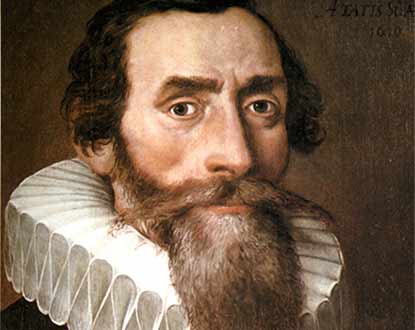
French Chemist
1743-1794
He demonstrated the conservation of mass during a chemical reaction. He discovered the nature and role of oxygen. He established the composition of water. He showed that respiration is a combustion of carbon compounds with the formation of carbon dioxide.
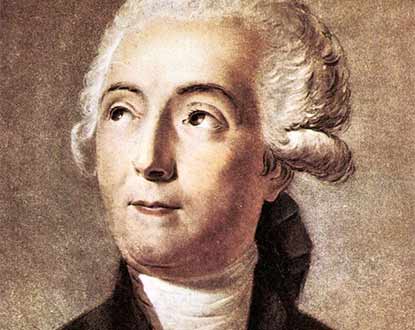
French Chemist
1939-
A professor at the Collège de France since 1979, he shared the Nobel Prize in Chemistry in 1987 with D. J. Cram and Ch. J. Pedersen for the synthesis of hollow molecules.
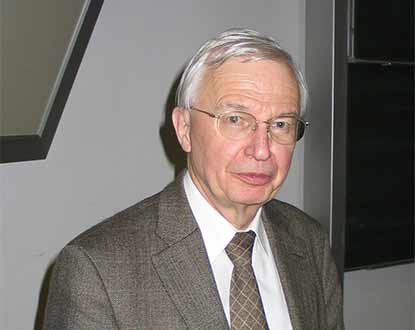
Greek Philosopher
460 - 370 BC
He is the author of the atomistic theory according to which the Universe is composed of atoms and void.
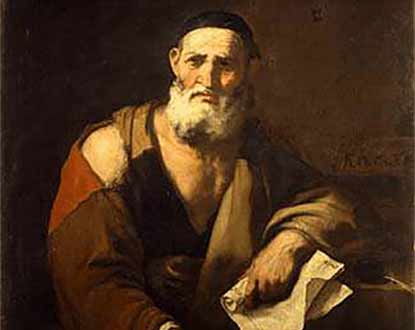
French Astronomer
1811-1877
Based on precise observations, he challenged the first tables of Uranus. He hypothesized the existence of an unknown mass that was perturbing the planet's movement and determined the orbital elements of a celestial body whose existence he supposed: Neptune.
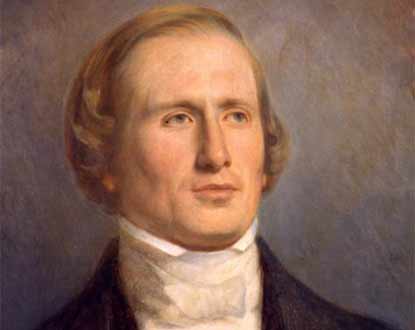
German Chemist
1803-1873
Liebig was one of the first organic chemists; he is at the origin of the extraordinary development of chemistry in Germany. In 1830, he devised the method for measuring carbon and hydrogen in organic bodies. He created the theory of the carbon and nitrogen cycles in nature.
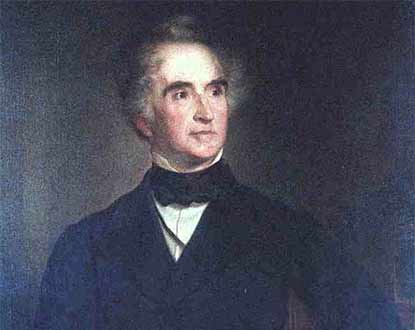
German Inventor
1842-1934
He is the inventor of the temperature exchanger. His name remains linked to research on very low temperatures, capable of liquefying air and industrially separating nitrogen, oxygen, and rare gases.
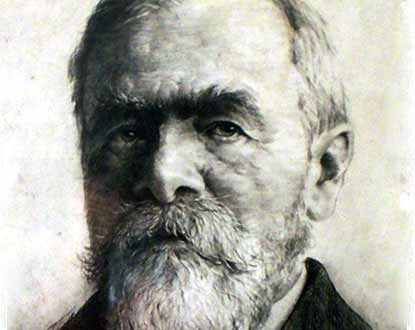
Russian Chemist
1834-1907
He classified atoms according to their atomic mass and demonstrated that the chemical properties of atoms are periodic functions of their atomic mass.
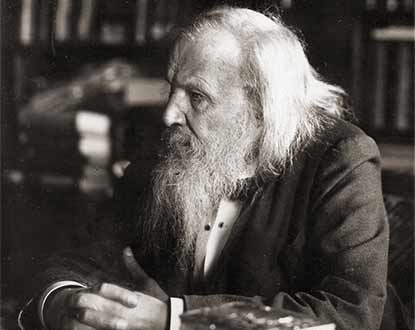
English Physicist and Mathematician
1642-1727
He first became interested in optics and astronomy before devoting himself to the mechanics of natural phenomena (Mathematical Principles of Natural Philosophy, 1687). From his observations, Newton developed the theory of universal gravitation.
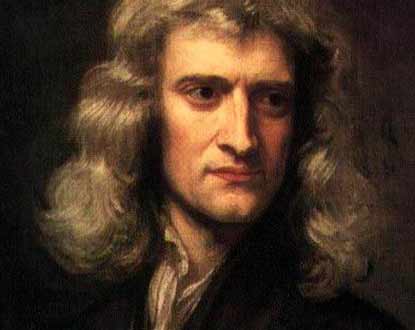
German Physicist
1789-1854
In 1827, he discovered the fundamental law of electric currents, which now bears his name. He precisely defined the concepts of resistance and resistivity, as well as their inverses.
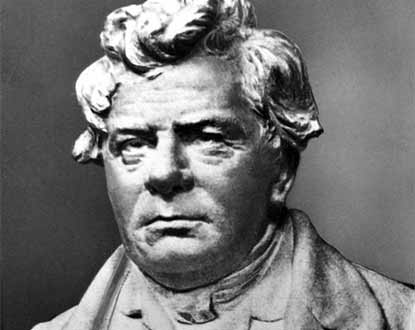
French Scientist
1623-1662
Showing an early interest in mathematics, Blaise Pascal invented a calculating machine around 1642. His famous experiment at Puy de Dôme developed his study on the weight of air and the vacuum. He argued in favor of the existence of a vacuum in the part of the tube freed by the descent of mercury. The question of the vacuum was hotly debated at that time. He wrote a Treatise on the Vacuum, which was never published, followed by two memoirs on the equilibrium of liquids and the weight of air.
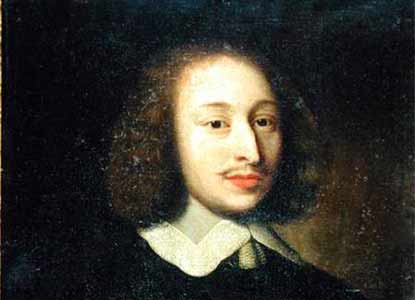
Greek Scientist
c. 90-168
His most famous work is the Almagest, which contains the principles that were the basis of ancient astronomy, which Copernicus was the first to challenge; geocentrism and uniform circular motion.
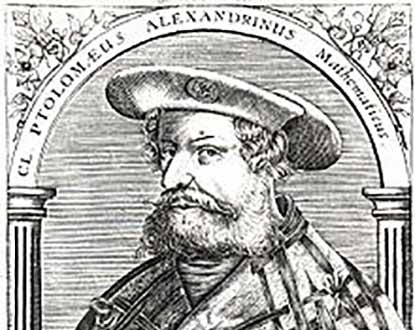
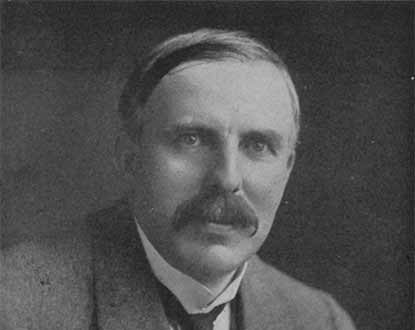
English Physicist
1871-1937
He mainly studied the constitution of matter, radioactivity, and transmutations, the ionization of gases, and received the Nobel Prize in Chemistry in 1908. In 1911, he imagined a dynamic model analogous to the solar system and was able to determine the order of magnitude of nuclei. In 1919, by bombarding nitrogen with radium rays, he obtained oxygen, thus achieving the first artificial transmutation. As early as 1920, he hypothesized the existence of the neutron.
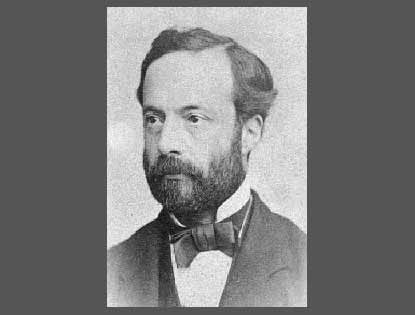
French Chemist
1818-1881
In 1854, he discovered the first industrial process for the preparation of aluminum.
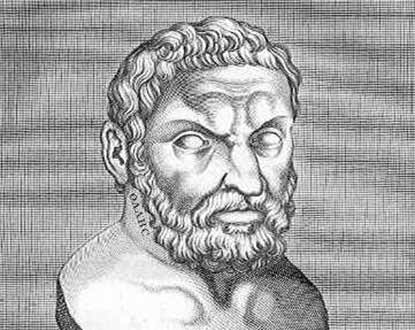
Greek Scientist
625 - 547 BC
He is said to have brought the foundations of geometry from Egypt to Greece. He solved the problem of inscribing a triangle in a circle, expressing the height of an object from its shadow. He is also said to have studied the angles of triangles and provided the proof of the equality of vertically opposite angles. He is said to have been the first to affirm that the Moon was illuminated by the Sun.
English Physicist
1856-1940
He was interested in all problems of physics in general, but it was the exploration of the electrical properties of matter that was the main goal of his research. In 1897, his experiments led him to discover the electron. The following year, he directly measured their charge. He imagined a model of the atom where the electrons were incorporated into a positive nucleus, which was later modified by Rutherford. He received the Nobel Prize in 1906.
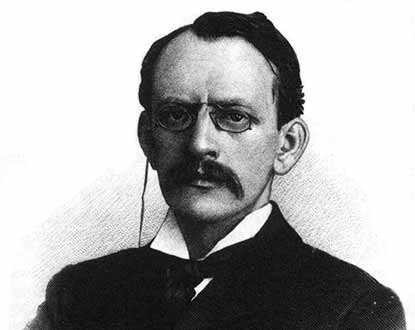
Italian Physicist
1745-1827
Author of remarkable works on electricity, inventor of the eudiometer and the battery that bears his name.