A compact solid has its own shape.
Its shape does not depend on the container that contains it.
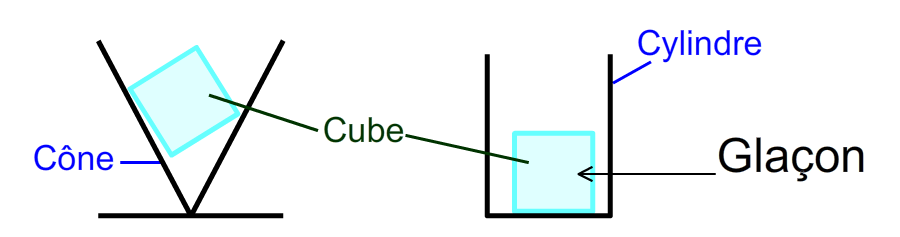
Its volume does not change when pressure is increased. It is incompressible.
A compact solid has its own shape.
Its shape does not depend on the container that contains it.
Its volume does not change when pressure is increased. It is incompressible.
A liquid does not have its own shape. It takes the shape of the container.
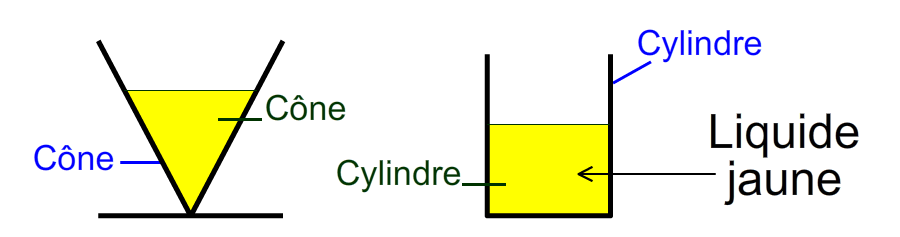
Its volume does not change.
Definition:
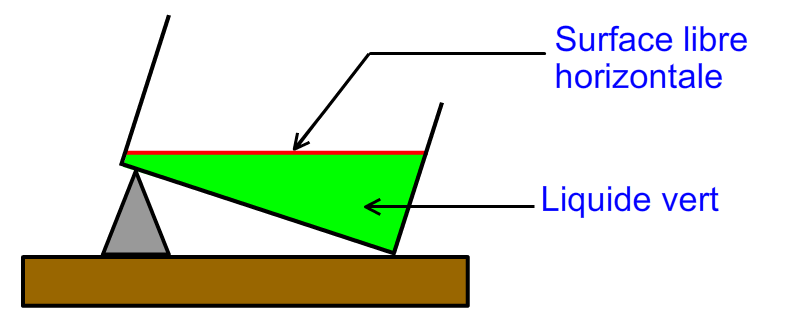
The free surface of a liquid is its surface in contact with the air.
When the liquid is at rest, its free surface is flat and horizontal.
Even if the container is tilted, the free surface of a liquid at rest remains horizontal.
A gas does not have its own shape.
It occupies all available space.
Its volume can be decreased by increasing the pressure. It is compressible.
Its volume can be increased by decreasing the pressure. It is expansible.
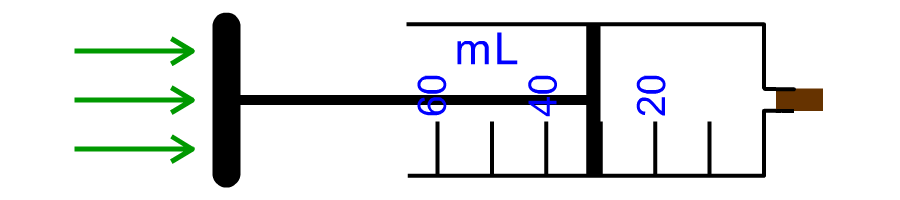
The syringe is sealed and its plunger is pushed.
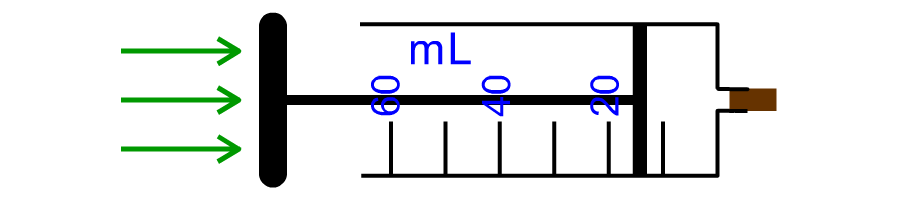
The plunger moves and the volume occupied by the gas decreases.
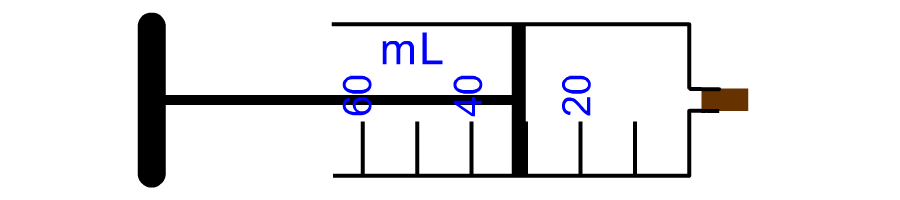
When the plunger is released, it returns to its initial position.
A gas is compressible.
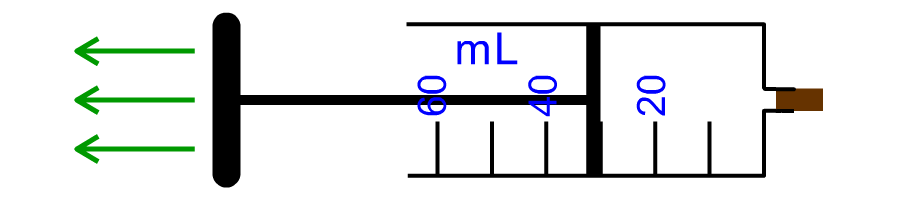
The syringe is sealed and its plunger is pulled.
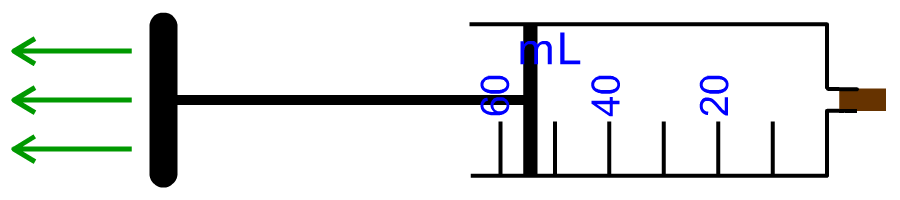
The plunger moves and the volume occupied by the gas increases.
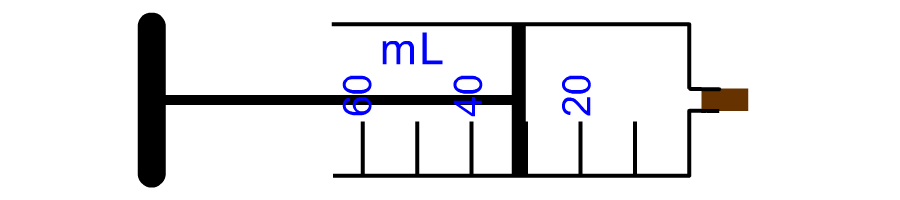
When the plunger is released, it returns to its initial position.
A gas is expansible.