mWater = 100 g
m3 sugars = 18 g
mSugared water = 118 g
-
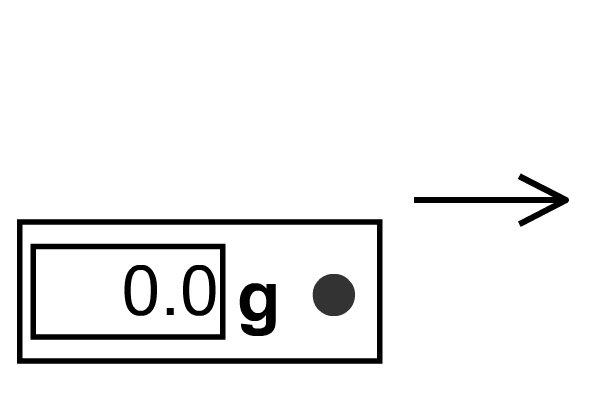
Step 1: Turn on the balance and wait for it to indicate 0.0 g.
-
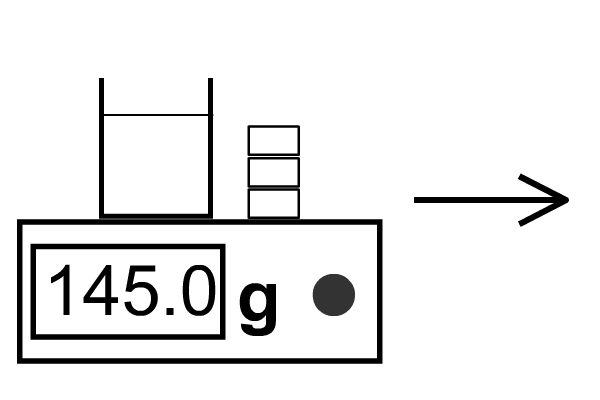
Step 2: Place a 27 g beaker containing 100 mL of water and 3 sugars of 6 g on the balance. The balance displays 145 g. Note this value as m1.
-
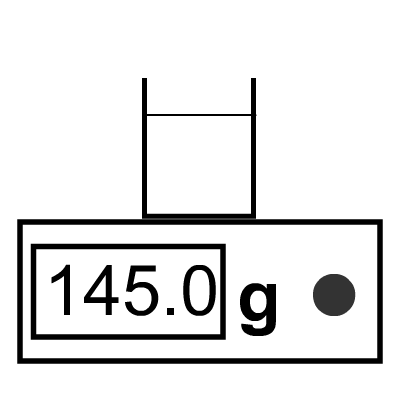
Step 3: Put the 3 sugars into the beaker and stir slowly until the sugar is completely dissolved. Then place the beaker back on the balance. The balance displays 145 g. Note this value as m2.
-
Step 4: Compare m1 and m2.
If m1 = m2, the mass is conserved during this dissolution.