How does mass vary during a chemical transformation?

🇫🇷 French Version

I— The chemical transformation studied 🔬

During a chemical transformation, substances are consumed (the reactants), and other substances are formed (the products) 🌟.

We study the action of hydrochloric acid on limestone.
The following experiment is carried out:
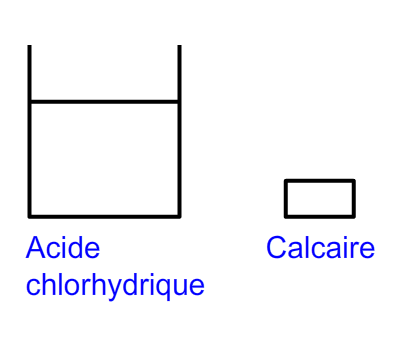
Step 1: preparation of the hydrochloric acid and limestone experiment
Progress arrow
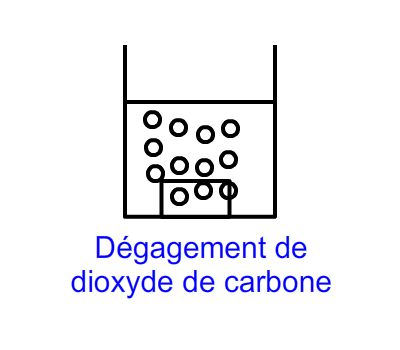
Step 2: acid and limestone are brought into contact, with gas release
Progress arrow
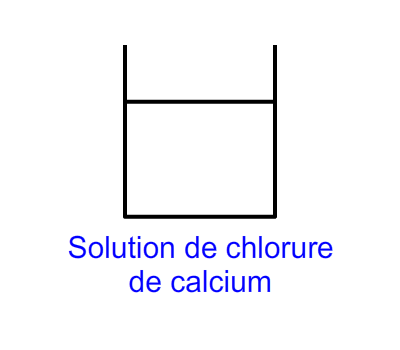
Step 3: observation of the products formed

The reactants are the acid and the limestone.
The products are carbon dioxide and calcium chloride solution.
This transformation is a chemical transformation 🧪.

II— How does mass vary during this chemical transformation? ⚖️

The following experiment is carried out:

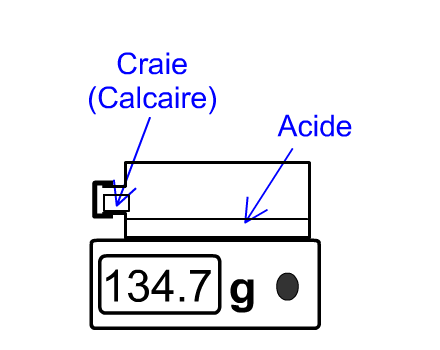
Mass measurement before the transformation
Progress arrow
Chemical transformation carried out in a closed system
Progress arrow
Mass measurement after the transformation

Mass does not vary during this transformation.
It remains equal to 134.7 g.

III— Summary 🧠

During a chemical transformation, mass does not vary. We say that mass is conserved.

The mass of the reactants that disappear is equal to the mass of the products that form.

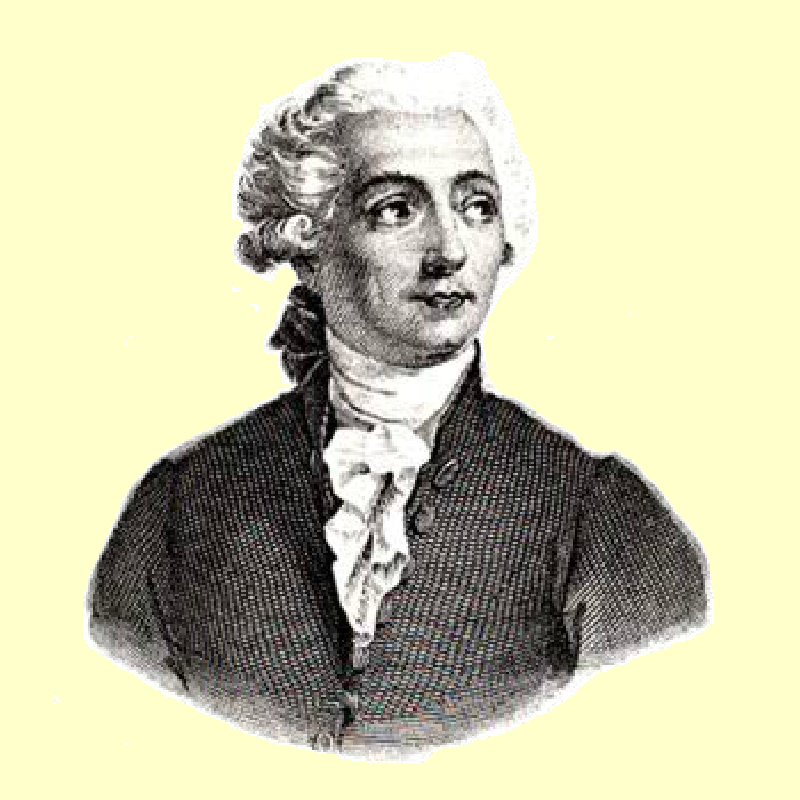
Portrait of Lavoisier, French chemist (1743–1794)
Lavoisier
French chemist
Born in 1743
Died in 1794

💡 Ready to test your knowledge?

Let’s go! 💥