Cycle 4: Physical Sciences and Chemistry
Fourth Grade Level
4th Grade
Cycle 4
1: What are the main constituents of air?
Course:
What are the constituents of air?
Exercises:
1. Multiple Choice: The constituents of air
2. True or False: The constituents of air
3. Study of a diagram: Respiration
4. Reconstruct sentences
5. Study of a diagram: The first four layers of the atmosphere
6. History: Lavoisier and the oxidation of mercury
7. The composition of air
8. Table of length units 8. Using the table of length units (Part 1)
8. Using the table of length units (Part 2)
8. Conversion of length units
9. Notations of length units
10. Simplified composition of air
11. Conversion of length units
Version 2
Version 3
Websites to consult:
2: How to determine the density of air?
Course:

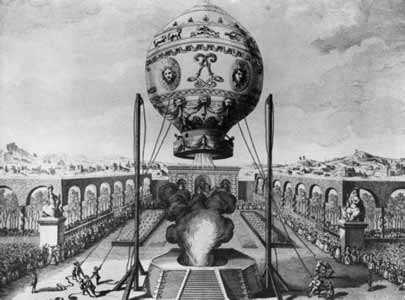
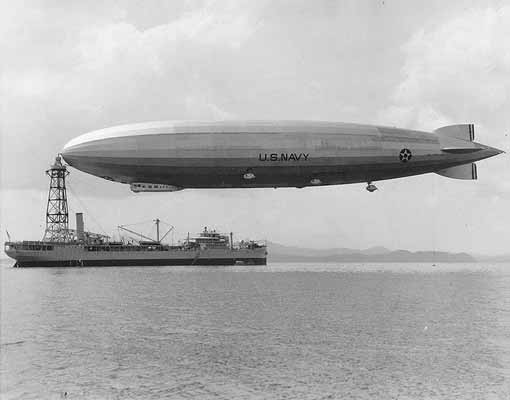
Top Image: Hot air balloons
Middle Image: Engraving depicting the first manned flight at Folie Titon, October 19, 1783
Bottom Image: The USS Los Angeles on a naval mooring mast (1931).
Exercises:
1. Multiple Choice: Density of air
2. True or False: Density of air
3. Air and matter
4. The method by displacement of a liquid
5. Reconstruct sentences
6. Table: Data on some gases
7. Calculation of the volume of a box
8. Calculation of the mass of helium present in a Rozière
9. Complete a table: Related to mass or volume?
10. Exercise on mass calculation
11. Multiple Choice: Mass measurement
3: How does the volume of a gas or liquid change when its pressure increases? Properties of the states of matter
Course:
Variation of the volume of a gas or liquid with pressure
Properties of the states of matter
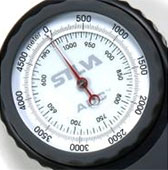
Image: Barometer and Altimeter
Exercises:
1. Multiple Choice: Variation of pressure with volume
2. True or False: Properties of the states of matter
3. Variation of volume with pressure in the case of a gas and a liquid
4. Variation of pressure as a function of volume in the case of a gas
5. Reconstruct sentences
6. Associate a sentence with a measuring device
Associate a quantity, a measuring device, and a unit
7. Variation of pressure with volume in the case of a gas
8. Tire pressures of a Nissan
9. Curve of the evolution of pressure with altitude
4: The smallest constituents of matter
Course:
Exercises:
1. Multiple Choice: Atoms and molecules
2. True or False: Atoms and molecules
3. Composition of molecules
Version 2
Version 3
4. Associate a name, a molecule, and a model
5. Molecules, formulas, and models
6. Composition of molecules in the alkane family
7. Atom, Diatomic Molecule, and Triatomic Molecule
8. Associate a molecule and a description
9. Choose the right word: Atom or molecule
10. Find the formulas corresponding to the represented enlargements
Version 2: Determine the formula of the represented models
Version 3: Determine the model corresponding to the proposed formulas
11. Associate the name of an atom with its symbol and its model
5: How are molecules arranged in the states of matter?
Course:
Arrangement of molecules in the three states of matter
Exercises:
1. Multiple Choice: Arrangement of molecules
2. True or False: Arrangement of molecules
Version 2
Version 3
3. Models and states
4. Pure substance or mixture?
5. Give a title to the enlargements
Version 2
6. Find the enlargement of the illustrated substances
6: What happens when carbon burns? What are the differences between a chemical transformation and a physical transformation?
Course:
Combustion of carbon
Physical transformation and chemical transformation
Exercises:
1. Multiple Choice: Combustion of carbon
2. True or False: Combustion of carbon
2. True or False: Chemical transformation
3. Reconstruct a sentence
4. Reactant(s) and product(s)?
5. Chemical transformation or physical transformation
Version 2
6. Find the name of the illustrated transformations
7. Combustion of carbon and enlargements
7: What happens when methane burns?
Course:
Exercises:
1. Multiple Choice: Combustions of methane
2. True or False: Combustions of methane
3. Study of a diagram: Complete combustion of methane
4. Reconstruct a sentence
5. True or False: Combustions of carbon
6. Multiple Choice: Combustions of carbon
7. Multiple Choice: Combustions of methane
8. Chemical tests
9. Study of two transformations of methane
10. Multiple Choice: Combustions and chemical transformation
11. Combustion of alcohol
8: How does mass vary during a chemical transformation?
Course:
Conservation of mass during a chemical transformation
Exercises:
1. Multiple Choice: Conservation of mass
2. True or False: Action of hydrochloric acid on limestone
3. True or False: Combustion of carbon
4. Reconstruct sentences
5. Masses and combustion of carbon
6. Combustion of carbon and conservation of mass
9: The fire triangle?
Course:
Exercises:
1. Multiple Choice: The fire triangle
2. True or False: The fire triangle
3. Definition quiz
4. Reconstruct sentences
5. Fuel, oxidizer, or activation energy
10: How to balance a chemical equation?
Course:
How to balance a chemical equation?
How to determine the balanced chemical equation?
Exercises:
1. Multiple Choice: Balancing a chemical equation
2. True or False: Balancing a chemical equation
Version 2
3. Balancing chemical equations: Combustions of methane
3. Balancing chemical equations: Combustions of ethane
3. Balancing chemical equations: Combustions of propane
3. Balancing chemical equations: Combustions of butane 4. Balancing chemical equations: Oxidations of iron and an iron oxide
4. Balancing chemical equations: Oxidations of metals
5. 5 enlargements of chemical transformations
6. Balancing chemical equations
Version 2
7. True or False: Study of the chemical equation of the complete combustion of methane
Version 2
8. Study of the chemical equation of the complete combustion of butane
Version 2
9. Balanced or not balanced
Version 2
10. Definition quiz
11. What is the balanced chemical equation?
Version 2 --3-- --4-- --5-- --6-- --7-- --8-- --9-- --10--
12. Using the proportions of the chemical equation
Version 2 --3--
1: How to use a multimeter as an ammeter to measure current intensity?
Course:
Using a multimeter as an ammeter to measure intensity
Exercises:
1. Multiple Choice: Setting the multimeter as an ammeter
2. True or False: Setting the multimeter
3. Setting the multimeter
4. Using the multimeter as an ammeter
5. Sentence to reconstruct: Measuring intensity
6. Definition quiz
7. Meaning of six abbreviations
8. Using the multimeter as an ammeter
9. Multiple Choice: Conversion of intensity units
10. Definition quiz on quantities
11. True or False: The quantities
12. Abbreviations of quantities studied in physical sciences
Version 2
13. Description of a multimeter
14. Mounting an ammeter, a voltmeter, and an ohmmeter
15. Multiple Choice: Using the multimeter as an ammeter
2: Description of an electrical circuit: Loop, Node, and Branch
Course:
Description of an electrical circuit: Loop, branch, and node
Exercises:
1. Multiple Choice: Description of an electrical circuit
2. True or False: Description of an electrical circuit
3. Reconstruct a text (Puzzle)
4. Determine the number of loops and the type of circuit
Version 2
5. Click on the nodes of several circuits
Version 2
6. Click on the elements (terminal, branch, node) of several circuits
7. Multiple Choice: Observing loops, nodes, and branches in a circuit with branches
7. True or False: Observing loops, nodes, and branches in a circuit with branches
8. Definition quiz
9. Multiple Choice: Description of electrical circuits
3: What are the laws of current intensity?
Course:
Law of uniqueness of intensity
Law of additivity of intensities
Laws of current intensity
Exercises: Law of uniqueness of intensity
1. Multiple Choice: Law of uniqueness of intensity
2. True or False: Law of uniqueness of intensity
Version 2
3. Application of the generalized law of uniqueness of intensity
4. Work on hypotheses
5. Reconstruct the statement of the law of uniqueness of intensity
6. Definition quiz
7. Complete the writing of an exercise
8. Find the hidden sentence
9. Application of the law of uniqueness of intensity
Version 2
10. Application of the law of uniqueness of intensity
Exercises: Law of additivity of intensities
1. Multiple Choice: Law of additivity of intensities
2. True or False: Law of additivity of intensities
3. Law of additivity of intensities
4. Definition quiz
5. Study of diagrams of a circuit with branches
6. Associate a formula with a circuit
Exercises: Node law
1. Multiple Choice: Node law
2. True or False: Node law
3. Application of the node law
Exercises: Laws of intensity
1. Multiple Choice: Laws of current intensity
2. True or False: Laws of current intensity
3. Writing of an exercise
4. Illustration of the laws of current intensity
5. Hydraulic analogies
6. Reconstruct sentences
4: In a series circuit, does the intensity depend on the order of the receivers?
Course:
Intensity and order of receivers in a series circuit
Intensities and number of receivers
Exercises:
1. Multiple Choice: Series circuit and receivers
2. True or False: Series circuit and receivers
3. Reconstruct sentences
4. Series circuit and order of receivers
5. Series circuit and number of receivers
6. Intensities and generator
7. Order of receivers
5: How to use a multimeter with the voltmeter function to measure voltage?
Course:
Setting the multimeter as a voltmeter
Exercises:
1. Multiple Choice: Setting the multimeter as a voltmeter
2. True or False: Setting the multimeter as a voltmeter
3. Reconstruct sentences
4. Voltmeter and ranges
5. Using a multimeter
6. Multiple Choice: Conversion of voltage units
7. Multiple Choice: Voltage measurement
6: What are the laws of voltage?
Course:
Law of additivity of voltages
Law of uniqueness of voltage
Laws of voltage
Exercises: Law of additivity of voltages
1. Multiple Choice: Law of additivity of voltages
2. True or False: Law of additivity of voltages
3. Associate a formula with an electrical circuit
4. Application of the law of additivity of voltages
Version 2
Exercises: Law of uniqueness of voltage
1. Multiple Choice: Law of uniqueness of voltage
2. True or False: Law of uniqueness of voltage
3. Application of the law of uniqueness of voltage
Exercises: Laws of voltage
1. Multiple Choice: Law of voltage
2. True or False: Law of voltage
3. Reconstruct sentences
4. Application of the laws of voltage
7: What are the values of the voltage and current of an open switch?
Course:
Exercises:
1. Multiple Choice: Switch, current, and voltage
2. True or False: Switch, current, and voltage
3. Definition quiz
4. Complete two diagrams
Version 2: Complete a table
5. Multiple Choice: Measurements of current and voltage
6. Multiple Choice: Measurements of current and voltage
7. True or False: Analyze results
8. Multiple Choice: Analysis of results
9. Text to complete
8: What is the role of a resistor? In a series circuit, how does the current vary when the resistance of the added resistor increases?
Course:
Exercises:
1. Multiple Choice: Roles of the resistor
2. True or False: Roles of the resistor
Version 2
3. Complete diagrams: Role of the resistor
4. Using a multimeter as an ohmmeter
5. Reconstruct sentences
6. Meaning of abbreviations
7. Mounting of measuring devices: voltmeter, ammeter, and ohmmeter
8. The quantities used in electricity
Version 2
9. Using the color code
10. Complete diagrams: Resistance and current
11. Using a multimeter as an ammeter, voltmeter, and ohmmeter
9: In the case of a resistor, what are the relationships between voltage U, current I, and resistance R?
Course:
Ohm's law and the relationships between U, I, and R for a resistor
Exercises:
1. Choose the relationship between U, I, and R to use
2. Using Ohm's law
Corrected exercises:
1. Using the relationships between U, I, and R in the case of a resistor
10: How to determine the resistance of a resistor from its voltage-current characteristic?
Course:
Calculation of the resistance of a resistor from its voltage-current characteristic
Exercises:
1. Reading coordinates
2. Calculation of resistance R from the voltage-current characteristic
3. Calculation of resistance R from the voltage-current characteristic
Corrected exercises:
1. Obtaining and using the voltage-current characteristic of a resistor
1: The speed of light or the speeds of light? What are the relationships between distance d, duration (time) t, and speed v?
2: How to express astronomical distances in light-years and using powers of 10?
3: The use of radiation
Course:
Exercises:
4: The speed of sound propagation
Course:
Exercises:
5: Determine a distance with a sound signal
Course:
Exercises:
1: The effects of mechanical actions
Course:
Exercises:
2: The interactions
Course:
Exercises:
3: Modeling an action
Course:
Exercises:
4: The velocity vector
Course:
Exercises:
5: Variation of speed and movements
Course:
Exercises: